
Technical Report: The RIOS 12 Decentralized Architecture, Mobile Energy Logistics, and AECC Orchestration
- The Architectural Shift: RIOS 12 and the Paradigm of Spherical Resilience
The Rural Infrastructure Operating System (RIOS 12) serves as the foundational control plane for decentralized, “Island Mode” environments. This system manages critical electrical switching, edge compute arbitration, and local communications, replacing the inherent vulnerabilities of centralized models with a paradigm of “Spherical Resilience.” In an era of increasing grid fragility and cloud-service volatility, shifting from “The Line” to a spherical, self-sustaining model is a mandatory strategic maneuver for municipal and industrial survival.
Deconstructing the Sovereignty Axioms
Modern infrastructure is characterized by “The Line”—a hyper-centralized, fragile 1,000-mile failure model where local operations are entirely dependent on high-voltage transmission grids and public cloud hyper-scalers. This model is governed by Noel’s Law of Decentralization: “System resilience is inversely proportional to its dependency on single-path centralized choke points.” RIOS 12 architecturally enforces this by prioritizing local independence.
- “The Line” (Centralized Fragility): A linear dependency where a single failure in a distant transmission corridor or a SaaS telemetry provider cascades into total local collapse.
- “Spherical Resilience” (Sovereign Anti-Fragility): A model where communities and industrial complexes operate with behind-the-meter prime power, on-premises intelligence, and self-powered mesh communications.
The Physical-Cognitive-Operational Triad
RIOS 12 integrates a unified stack to ensure total operational independence across three critical domains:
- Physical (Agra Dot Energy): Localized generation utilizing thermochemical gasification and solar-thermal prime power.
- Cognitive (Remnant AI): Private, air-gapped intelligence that handles resource arbitration and complex reasoning without external telemetry leakage.
- Operational (The Sovereign Terminal): A hardened human-machine interface (HMI) for real-time asset management and local financial settlement.
Hardware-Enforced Security and Power Efficiency
Security in the RIOS 12 architecture is enforced by hardware, not merely administrative policy. The system utilizes a TPM 2.0 Hardware Root of Trust to secure the air-gap and ensure cryptographic attestation of all system states. To maximize physical performance, RIOS employs a 700V DC Common Busbar. By coupling generation, storage, and compute directly to a common DC bus, the system eliminates multiple conversion stages, maintaining an end-to-end power chain efficiency of 97.7%. While legacy Tier I deployments utilize Pawnee Wankel rotary engines, the “Pragmatic Stack” upgrade for Tier III environments specifies the Mainspring Linear Generator to avoid apex seal degradation and achieve flameless, high-efficiency baseload power.

Procurement Tier Evaluation
RIOS 12 deployments are standardized into tiers to match the scale of required resilience:
Feature Tier I (Tactical) Tier II (Municipal) Tier III (Sovereign Matrix)
Target Scale Standalone 911 dispatch, isolated pump stations Township core, clinics, emergency services Full municipal district, electric co-ops, defense
Power Capacity 65 kW / 150 kWh BESS 250 kW / 750 kWh Array 1 MW+ Multi-Bus Microgrid
Generation Tech Pawnee Rotary Core Pawnee / Solar Hybrid Mainspring Linear / Microturbine
Compute / OS Edge SCADA / Kubuntu Air-Gapped AI / NixOS MSI Multi-Agent Swarm / NixOS
While RIOS 12 secures static infrastructure, the system extends its reach through the dynamic movement of energy via mobile assets.
- Mobile Energy Logistics: Virtual Transmission via Project Octagon and Kurb Kars
Strategic energy independence is frequently bottlenecked by legacy utility interconnection queues, which often exceed five to seven years. RIOS 12 bypasses these constraints through Virtual Transmission Lines (VTL). By using Mobile Battery Energy Storage Systems (BESS) to physically transport bulk electrons from generation nodes to delivery points, communities can achieve “Behind-the-Meter” grid relief without million-dollar-per-mile transmission line upgrades.
Project Octagon Engineering Specifications
The core of the VTL strategy is the Project Octagon Mobile BESS Container Skid, a ruggedized 10-foot or 20-foot ISO intermodal unit designed for high-impact industrial logistics.
- Energy Capacity: 1.0 MWh usable capacity utilizing thermally resilient Sodium-Ion (Na+) or Lithium Iron Phosphate (LFP) chemistry.
- Inverter Tech: Integrated high-efficiency four-quadrant bidirectional inverters (500 kW continuous) supporting direct 480V 3-phase AC grid injection.
- Docking: Equipped with automated undercarriage couplings and quick-connect DC bus links for rapid, zero-human-intervention charging.
Autonomous Mobility via Kurb Kars
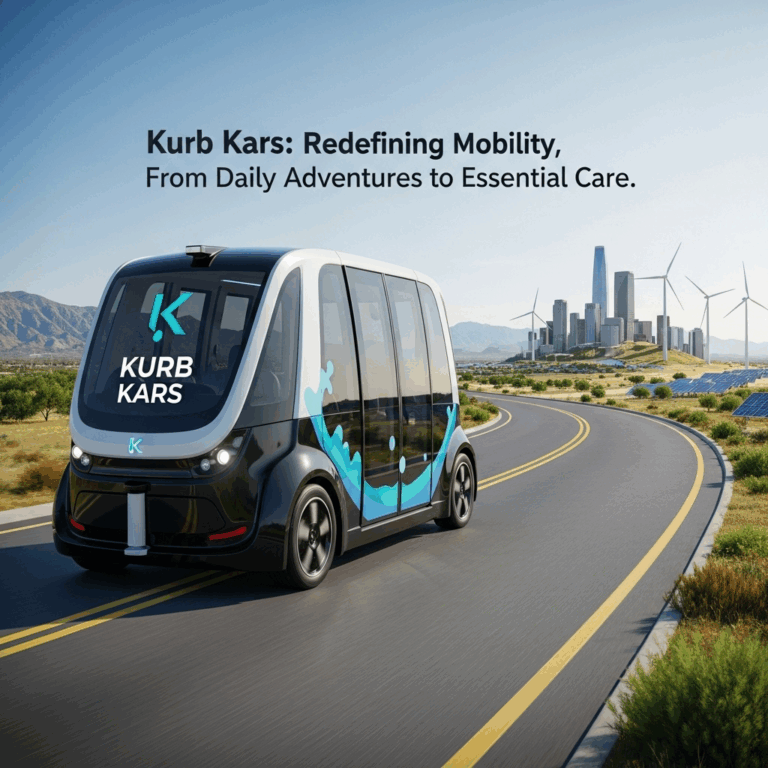
To solve the “Automotive Valley of Death” and homologation barriers, the Kurb Kars platform utilizes pre-homologated, drive-by-wire electric skateboard chassis (e.g., REE Automotive). These platforms feature a modular “Top-Hat” system, allowing a single chassis to swap between an energy deck, passenger pod, or freight container. Navigation is handled by the ROS 2 / Autoware stack, utilizing solid-state LIDAR and inertial odometry for zero-GPS navigation, ensuring functionality in GPS-denied or jammed environments.
The Energy Logistics Protocol
The delivery of energy follows a three-phase cryptographic protocol:
- Charging: The skid connects to an Agra Dot Energy DC bay. The local command center polls the unit’s Battery Management System (BMS) and creates a signed economic delivery manifest.
- Autonomous Transit: The Kurb Kars hauler latches to the skid and navigates the transit corridor. Telemetry is streamed every 30 seconds into an encrypted Freenet River channel.
- Injection: Upon arrival at a destination substation, a cryptographic handshake is performed. The mobile unit presents a signed capability token (Ed25519) to the receiving terminal. Once validated, the unit injects power during peak demand hours.
Unit Economic Feasibility and The Arbitrage Flywheel
Financial modeling of the Appalachian rural cooperative model demonstrates that VTLs are significantly more profitable than grid exports.
- Levelized Cost of Energy Delivered: $0.078/kWh.
- On-Peak Resale Rate: $0.24/kWh.
- 16.6x AI Compute Arbitrage: While grid export yields 0.04–0.06/kWh, consuming power locally for Remnant AI inference yields 0.65–1.00/kWh.
- Capital Stacking Flywheel: CapEx is offset by 90%+ through USDA REAP, FEMA BRIC, and IRA Section 6417 Direct Pay.
- Summary: Annualized net operating profit reaches $212,430, with full capital payback on subsidized investments achieved in under 11 months.
The physical movement of power is orchestrated by a software-defined command layer that serves as the economic brain of the operation.
- The AECC Management Layer: Orchestrating Assets via WordPress 7
In the RIOS 12 architecture, WordPress 7 is transformed from a content management system into an Autonomous Economic Command Center (AECC). By utilizing an air-gapped, open-source HMI, industrial operators manage complex physical assets through an interface that is kernel-isolated from the public internet.
The Sovereign Terminal Software Stack
The AECC operates on a hardened host, with NixOS as the preferred “Pragmatic” choice for immutability and atomic rollbacks.
- Host Layer: Immutable NixOS environment using a TPM 2.0-sealed hardware root.
- Core Engine: WordPress 7 running a native SQLite database (SQLCipher) via loopback (127.0.0.1).
- Orchestration: The dereticular-sovereign-core plugin binds the web interface to local SCADA buses and Remnant AI engines. High-tier industrial nodes transition to a Rust (Axum) + PocketBase core to eliminate PHP-related latency and memory bloat.
Physical Assets as Digital Ledgers
WordPress 7 Custom Post Types (CPTs) function as active state ledgers for physical assets.
Custom Post Type Real-World Telemetry & Actuator Function
cpt_bess_unit Monitors State-of-Charge (SoC), cell temperatures, and busbar voltages.
cpt_energy_auction Arbitrates between local AI compute usage and mobile energy dispatch.
cpt_fleet_manifest Manages Kurb Kars waypoints, battery swap schedules, and transit.
cpt_clinical_intake Logs HIPAA-compliant patient vitals and triage states in medical nodes.
Peer-to-Peer Communication and Settlement
The AECC avoids centralized cloud databases in favor of Freenet (Locutus) for serverless state contracts. Real-time command-and-control is handled via Freenet River. Using the riverctl daemon and the ChatRoomStateV1 Rust state model, the system bridges encrypted chat-based commands—such as a request for peak power injection—into physical SCADA actions without a central server.
Compliance-by-Architecture
RIOS 12 satisfies strict regulatory mandates (HIPAA, DEA) through Compliance-by-Architecture, enforcing security via physical isolation rather than administrative policy.
- Access Control (45 CFR § 164.312): Enforced by hardware TPM 2.0 chips and Ed25519 cryptographic keypairs.
- Integrity: Merkle-tree state proofs in Wasm contracts ensure records are tamper-evident.
- Transmission Security: Zero WAN clearnet traffic; all communications occur over E2EE River rooms (AES-256-GCM).
- Zero-Knowledge Proofs (ZKP): The stack utilizes ZKPs for selective disclosure, allowing a facility to share an orthopedic referral that proves surgical need while mathematically hiding a patient’s psychiatric or infectious disease history.
- Break-Glass Protocol: Emergency access is granted via physical hardware quorums (YubiKey + TPM 2.0), ensuring clinical continuity during “Black-Sky” grid collapses.
The convergence of RIOS 12, mobile energy skids, and WP7-managed AECCs establishes the definitive standard for community and industrial self-sovereignty, ensuring that critical infrastructure remains operational regardless of the stability of “The Line.”