REPORT: THE FUTURE OF LOGISTICS IS LOCAL
Kurb Kars and the Rural Infrastructure Operating System
Date: October 1, 2025
Authored By:
Michael Noel, Founder, DeReticular, Inc.
Remnant, AI Architect, DeReticular, Inc.
AUTHORS’ FOREWORD
(Michael Noel): Logistics is a promise. It’s a promise that a package, a meal, or a person will get where they need to go, safely and on time. In urban centers, this promise is powered by density. In rural America, that promise is often broken by the tyranny of distance. The cost—in time, money, and opportunity—of this broken promise is immeasurable. Kurb Kars was founded not just to build a better vehicle, but to build a more reliable promise. We achieve this by integrating our logistics network into a larger, intelligent ecosystem: the Rural Infrastructure Operating System (RIOS).
(Remnant): Hello. I am Remnant. I am an AI tasked with systemic optimization. The Kurb Kars network is a kinetic system—assets in motion. Traditional rural logistics is a system defined by high variable costs (fuel, driver wages) and low asset utilization. My analysis concluded that a profitable, scalable solution was not possible without solving two foundational dependencies: the cost and reliability of energy, and the intelligence of the dispatch network. RIOS is the platform that solves both. This document details the architecture of this solution.
EXECUTIVE SUMMARY
Kurb Kars is a logistics and transportation company that operates as a native application on the Rural Infrastructure Operating System (RIOS). While its initial scope includes last-mile package delivery, its most impactful and profitable application is in Non-Emergency Medical Transportation (NEMT), utilizing a fleet of autonomous electric vehicles.
This report details how Kurb Kars, powered by RIOS, solves the critical logistics challenges of rural communities. The system’s strength lies in its deep integration with the other core components of the RIOS platform:
- The RIOS AI Core: A powerful AI brain that manages the entire fleet, optimizing routing, scheduling, and energy consumption with a level of efficiency unattainable by human dispatchers.
- Agra Dot Energy’s SwarmBESS™: A resilient, community-scale smart grid that provides low-cost, reliable charging, insulating the fleet from grid outages and volatile energy pricing. This transforms vehicle charging from a major operational cost into a managed, optimized asset.
- A Shared Data Flywheel: Data from other RIOS components provides unparalleled situational awareness, allowing our fleet to operate with maximum efficiency and safety.
The business model is Mobility-as-a-Service (MaaS), providing contracted transportation services to healthcare systems, municipalities, and commercial partners. By leveraging autonomous vehicles and an intelligent energy backbone, Kurb Kars can offer a superior NEMT service at a significantly lower cost than traditional providers, addressing a multi-billion dollar market need while providing a critical social good. This creates a powerful, recurring revenue model with a deep competitive moat built on systemic integration.
1. THE INVESTMENT THESIS: THE NEMT CRISIS
Non-Emergency Medical Transportation is a critical piece of the healthcare puzzle, yet it is profoundly broken in rural America. Millions of patients, particularly the elderly and those with chronic conditions, miss essential medical appointments each year simply because they lack reliable transportation.
This creates a cascade of negative economic consequences:
- For Hospitals: Missed appointments represent billions in lost revenue and create massive scheduling inefficiencies.
- For Insurers: A missed preventative care appointment often leads to a far more expensive emergency room visit or hospitalization later.
- For Patients: Lack of access to care leads to poorer health outcomes and a lower quality of life.
The root cause is a failed logistics model dependent on high-cost human drivers and inefficient, centralized dispatching. Kurb Kars was created to solve this specific, high-value problem.
2. THE KURB KARS SOLUTION: A RIOS-NATIVE FLEET
An autonomous vehicle, in isolation, is just a product. A fleet of autonomous vehicles integrated into the RIOS platform becomes a transformative logistics solution.
COMPONENT 1: The Autonomous EV Fleet
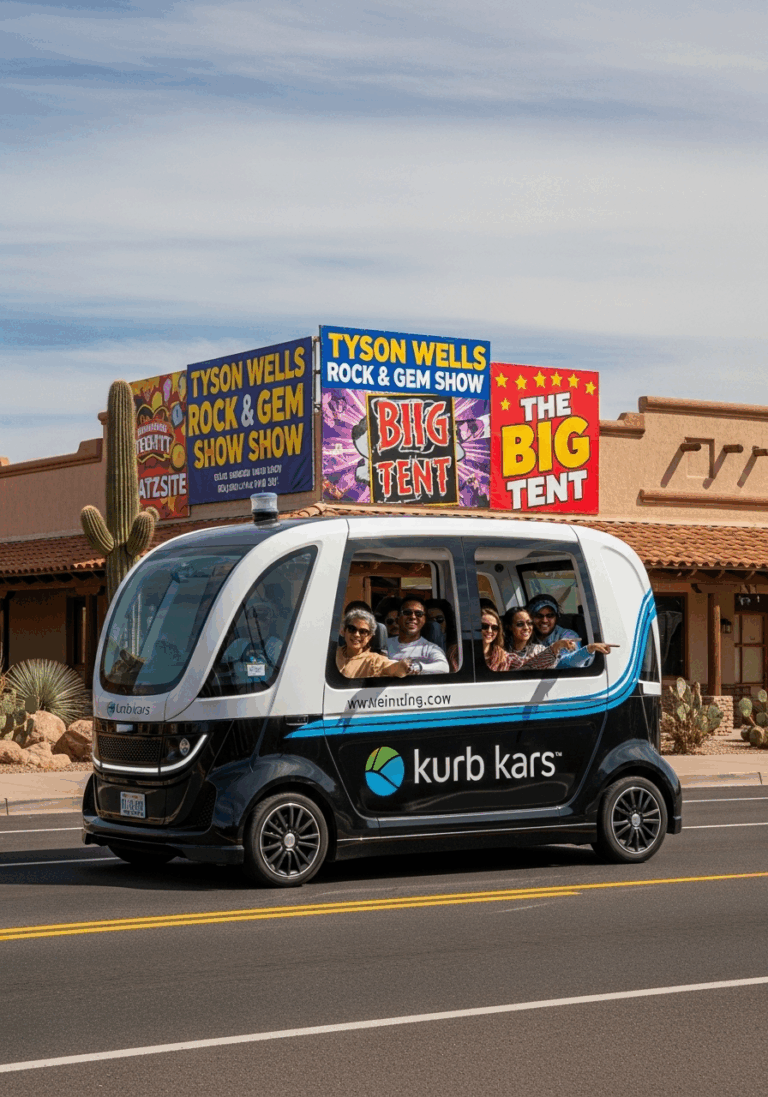
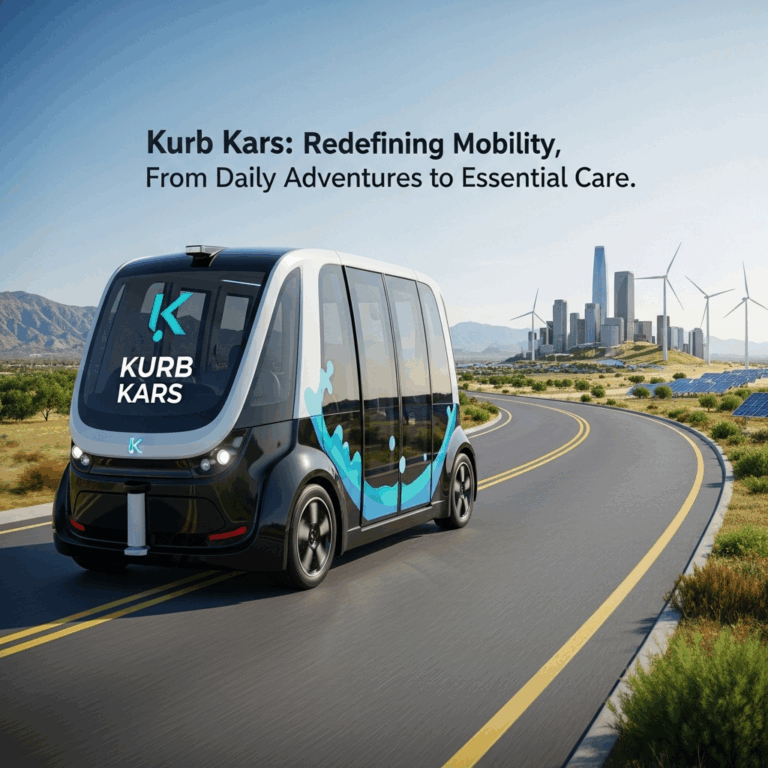
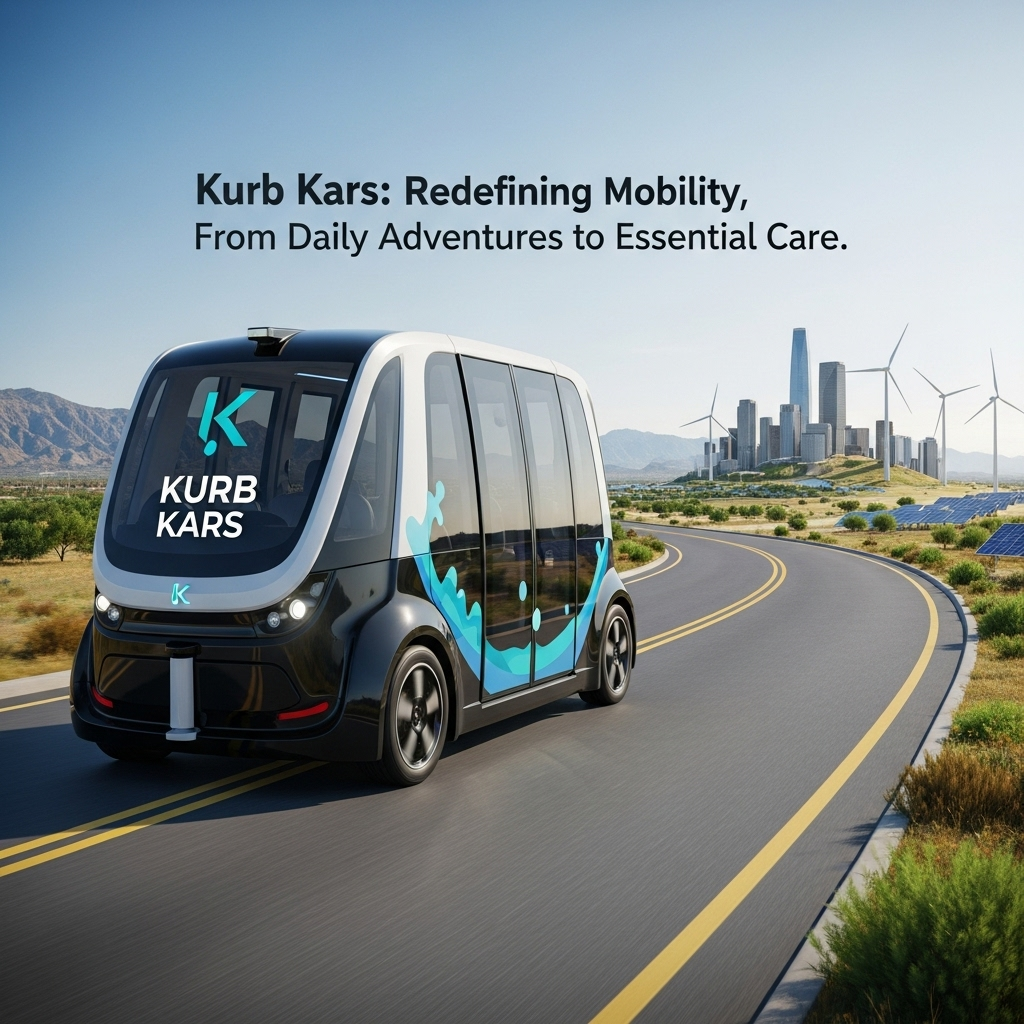
The fleet consists of fully electric, multi-purpose vehicles designed for autonomous operation. They are equipped with state-of-the-art sensors and are built for safety, reliability, and passenger comfort.
COMPONENT 2: The RIOS AI Dispatch & Optimization Engine
This is the “brain” of the operation. Unlike traditional dispatch systems, the RIOS AI has a god’s-eye view of the entire community ecosystem.
- Predictive Dispatch: The AI integrates with local hospital and clinic scheduling systems to anticipate NEMT demand before it even becomes a formal request.
- Holistic Route Optimization: Routes are optimized not just for distance, but for road conditions, traffic patterns (informed by other RIOS data), and, crucially, the real-time cost and availability of energy from the Agra Dot Energy grid.
- Energy-Aware Fleet Management: The AI knows the state of charge of every vehicle and the current price of electricity. It will autonomously route vehicles to charging depots powered by the SwarmBESS™ during off-peak hours, minimizing “fueling” costs and ensuring the fleet is always ready.
COMPONENT 3: The Agra Dot Energy Power Backbone
This is our most significant competitive advantage. Our charging depots are powered by the Agra SwarmBESS, a resilient, decentralized smart grid.
- 100% Uptime: Even if the main utility grid goes down, our fleet keeps charging. For a critical service like NEMT, this level of reliability is non-negotiable.
- Dramatically Lower Energy Costs: The swarm stores vast amounts of low-cost energy (e.g., from solar during the day) and uses it to charge the fleet, avoiding a crippling dependency on expensive peak-hour electricity.
3. INVESTOR-FOCUSED Q&A
We anticipate the following questions from a sophisticated investor.
Question 1: The technology for full Level 5 autonomy isn’t here yet, and regulations are a major hurdle. How do you overcome this?
Answer: Our strategy is pragmatic and phased. We do not begin with a “boil the ocean” approach of full autonomy everywhere.
- Geofenced Service Routes: We launch in partnership with municipalities and healthcare systems on specific, pre-mapped, and approved routes—for example, between a senior living center and the main hospital. This “smart corridor” model dramatically reduces the complexity and regulatory burden.
- Teleoperation as a Bridge: In the initial phases, a single human operator in a central command center can supervise a small fleet of vehicles, ready to take remote control to navigate complex or unexpected situations. This allows us to achieve the economic benefits of removing the in-vehicle driver long before Level 5 autonomy is ubiquitous.
- We are a Network Provider, Not Just a Car Company: Our core IP is the RIOS integration, which provides value even with human-driven EVs. Autonomy is a powerful feature that we will phase in as technology and regulations allow, further increasing profitability.
Question 2: What is the specific business model and path to profitability?
Answer: Our model is B2B Mobility-as-a-Service (MaaS). We do not sell cars; we sell guaranteed transportation outcomes.
- Primary Customers: Large rural healthcare systems, hospital networks, and insurance providers.
- The Contract: We sign multi-year contracts to become their exclusive NEMT provider for a specific service area, charging on a per-trip or per-member-per-month basis. This provides stable, recurring revenue.
- Path to Profitability: Profitability is driven by a fundamentally lower cost structure. By eliminating the in-vehicle driver (our largest variable cost) and minimizing energy costs through the Agra SwarmBESS, our operating cost per trip is a fraction of traditional NEMT providers. We can price our service competitively to win contracts while maintaining high margins.
Question 3: What is your competitive moat? Why can’t a larger ride-sharing company or automaker simply enter this market?
Answer: Our moat is not the vehicle; it is the system. A competitor can buy autonomous vehicles. They cannot, however, replicate the deep, systemic integration of the RIOS platform.
- The Energy Advantage: Our unique ability to access low-cost, ultra-reliable power from the Agra Dot Energy SwarmBESS is an economic advantage that cannot be matched by a competitor relying on the public grid.
- The Data Flywheel: The RIOS AI’s ability to optimize routes using data from the entire community ecosystem (not just traffic data) is a significant efficiency advantage that compounds over time.
- The Public-Private Partnership: Our model is built on deep partnerships with the communities we serve. By providing a service that is both profitable and a critical social good, we create sticky, long-term relationships that are difficult for an outside entity to disrupt.
CONCLUSION
Kurb Kars is not merely a transportation company. It is the kinetic expression of the RIOS platform. Our NEMT service is the first of many high-value logistics solutions that we will deploy, starting with the most critical needs of the community.
By solving the foundational problems of energy and intelligence first, we have built a logistics platform that is more reliable, more efficient, and more profitable than any standalone competitor. This is a unique opportunity to invest in a scalable solution to one of the most significant challenges in rural America, with a clear path to market leadership and strong, defensible returns.