Sovereignty Reimagined An Introduction to the Sovereign Stack and Island Mode Independence
In an era defined by the decay of legacy systems, the quest for local resilience is no longer a luxury—it is a strategic necessity. National power grids and global supply chains have become liabilities, characterized by a “Centralized Fragility” that threatens the very core of community stability. To survive and thrive, we must adopt the Sovereign Stack: a modular, industrial-grade framework designed to transition communities from helpless dependency into a state of “Island Mode” independence.
1. The Concept of ‘Island Mode’: Freedom from the Grid
The DeReticular thesis posits that true security is found only when a community can fully “defect” from failing infrastructure. This is not about isolationism; it is about establishing a “financial weapon” of self-sufficiency that replaces brittle aid models with permanent, owned infrastructure.
“Island Mode” is the operational state in which a community or industrial zone functions with full independence from national power grids and centralized supply chains. It is the tactical ability to sever external ties at any moment and sustain complex operations indefinitely using local resources and networked intelligence.
The Architect’s Insight: Why Sovereignty Wins
For a community leader or visionary architect, moving from “Grid Fragility” to “Sovereign Resilience” is the ultimate social and financial victory. Under the Venture Studio model, the community ceases to be a passive “borrower” of services and becomes the “lender” and owner of its own assets.
- The Social Win: Critical life-support systems—hospitals, logistics, and food production—remain operational regardless of regional collapse.
- The Financial Win: By transforming energy from a recurring liability into a controlled asset, communities can exploit market volatility to generate revenue rather than being consumed by it.
The Sovereign Stack demands a robust Muscle layer to sustain the Mind; power without the means to generate it is merely a countdown to failure.
2. The Muscle: Plasma Gasification and Agra Dot Energy
Every sovereign community requires a “Stomach”—a layer capable of converting local waste into the life-sustaining energy required for industry. This is the “Muscle” of the stack, powered by Agra Dot Energy through the process of plasma gasification. Unlike intermittent renewables, this technology provides carbon-negative, 24/7 baseload power.
Comparison: Centralized Fragility vs. Sovereign Resilience
| Feature | Traditional Energy (Centralized Fragility) | Sovereign Energy (Localized Resilience) |
| Source | Fossil fuels, large-scale hydro | Local waste, hemp, livestock biomass |
| Grid Status | Grid-dependent / Brittle | Island Mode / Defect-ready |
| Environmental Impact | Carbon-heavy | Carbon-negative / Waste-to-energy |
| Reliability | Susceptible to cascading blackouts | Baseload (Always-on) |
| Primary Unit | Utility-scale (Subject to external limits) | 10 TPD Micro-Unit up to 11 MW Nodes |
Turning Local Waste into Global Currency
In the Sovereign Stack, feedstocks are regional assets. In Uganda (Node 4), the “Green Industrial Engine” utilizes hemp biomass and agricultural waste to generate 10-11 MW of power for a 7,000-acre industrial park. In Texas (Node 5), a 10 TPD (Tons Per Day) Agra Micro-Unit validates the model using livestock biomass. This is more than power generation; it is waste-to-wealth conversion.
Power without movement is a static fortress; to truly defect from the grid, a community must master the autonomous flow of its own goods and people.
3. The Motion: Kurb Kars and Autonomous Logistics
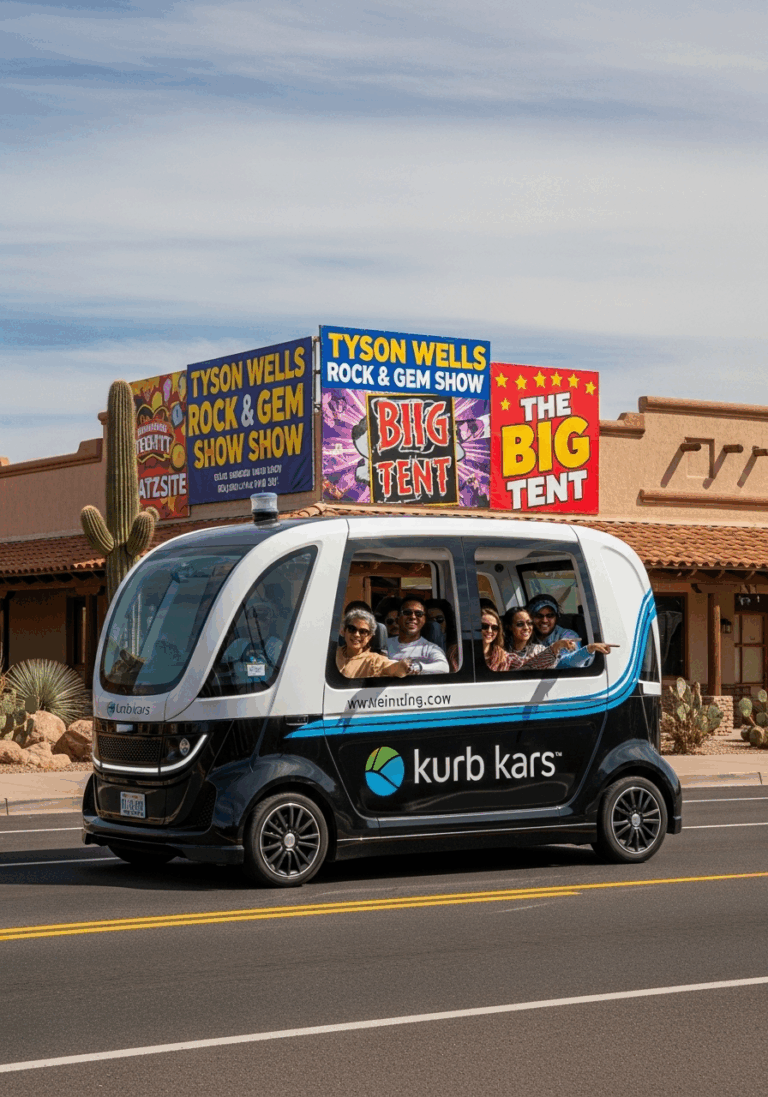
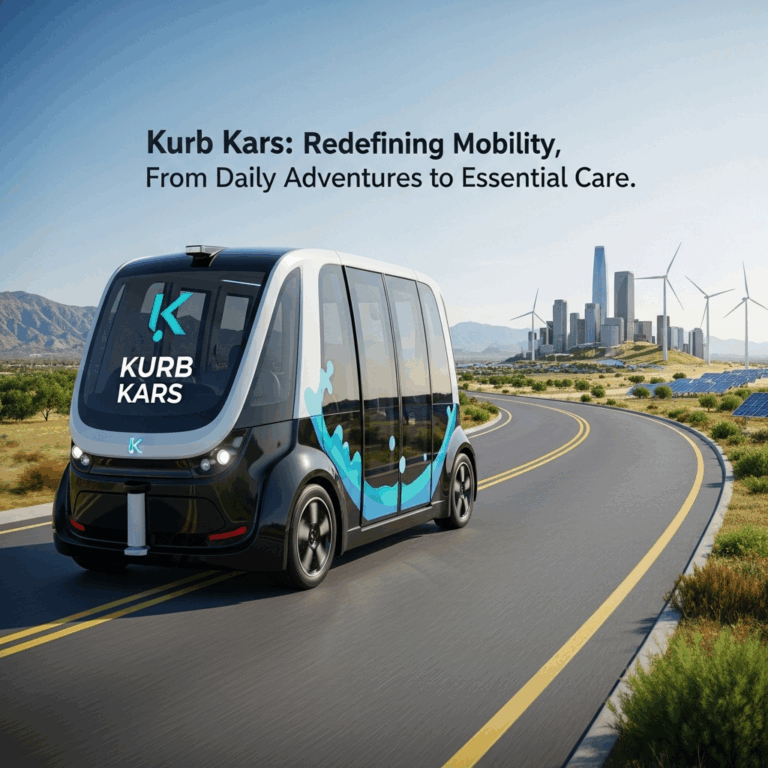
The “Motion” layer of the stack, facilitated by Kurb Kars, acts as the “Reflexes” of the system. By integrating autonomous logistics and robotics, a community maintains its internal flow without reliance on external fuel networks or vulnerable driver pools.
The three primary roles of autonomous logistics include:
- Transport & Hospitality: Managing the “Concierge Layer” by moving residents and visitors across eco-tourism or residential campuses.
- Non-Emergency Medical Transportation (NEMT): Ensuring reliable, automated transit for healthcare services, as demonstrated in Node 6.
- Cargo & Logistics: Coordinating the movement of raw materials and finished goods within industrial zones to ensure total supply chain continuity.
To ensure survival in “Hard Mode” environments, these systems undergo “Desert Hardening.” Testing in the 115°F extremes of Arizona (Node 3) ensures that the hardware remains functional when standard logistics networks fail. However, motion without intelligence is chaos; the stack requires a central nervous system to coordinate these efforts.
4. The Mind: RIOS (Rural Infrastructure Operating System)
The “Mind” of the Sovereign Stack is RIOS. This is the “Brain” of the network—a Federated Learning Mesh that connects independent nodes into a global, self-healing nervous system.
- Federated Learning: RIOS ensures that a “lesson” learned by a battery in the Arizona heat is instantly shared with nodes in Uganda or Canada, optimizing the entire global network.
- Data Vaults: Sovereignty requires owning your data. RIOS utilizes local, off-grid server racks to host private cloud infrastructure, preventing capital flight to centralized providers like AWS.
- OTA (Over-the-Air) Updates: Software authority is maintained through “The Architect” (Node 2), pushing intelligence updates globally to ensure every node possesses the latest defensive and commercial strategies.
The Sovereign Insight: By integrating zkVerify, RIOS allows Node 4 to monetize its carbon-negative output, turning verified environmental data into high-value carbon credits. Generating power is the Muscle; RIOS is the Mind that turns that Muscle into currency.
The intelligence of RIOS is best observed when it is applied to the world’s most volatile markets.
5. The Classroom: Node 5 and the Art of Grid Arbitrage
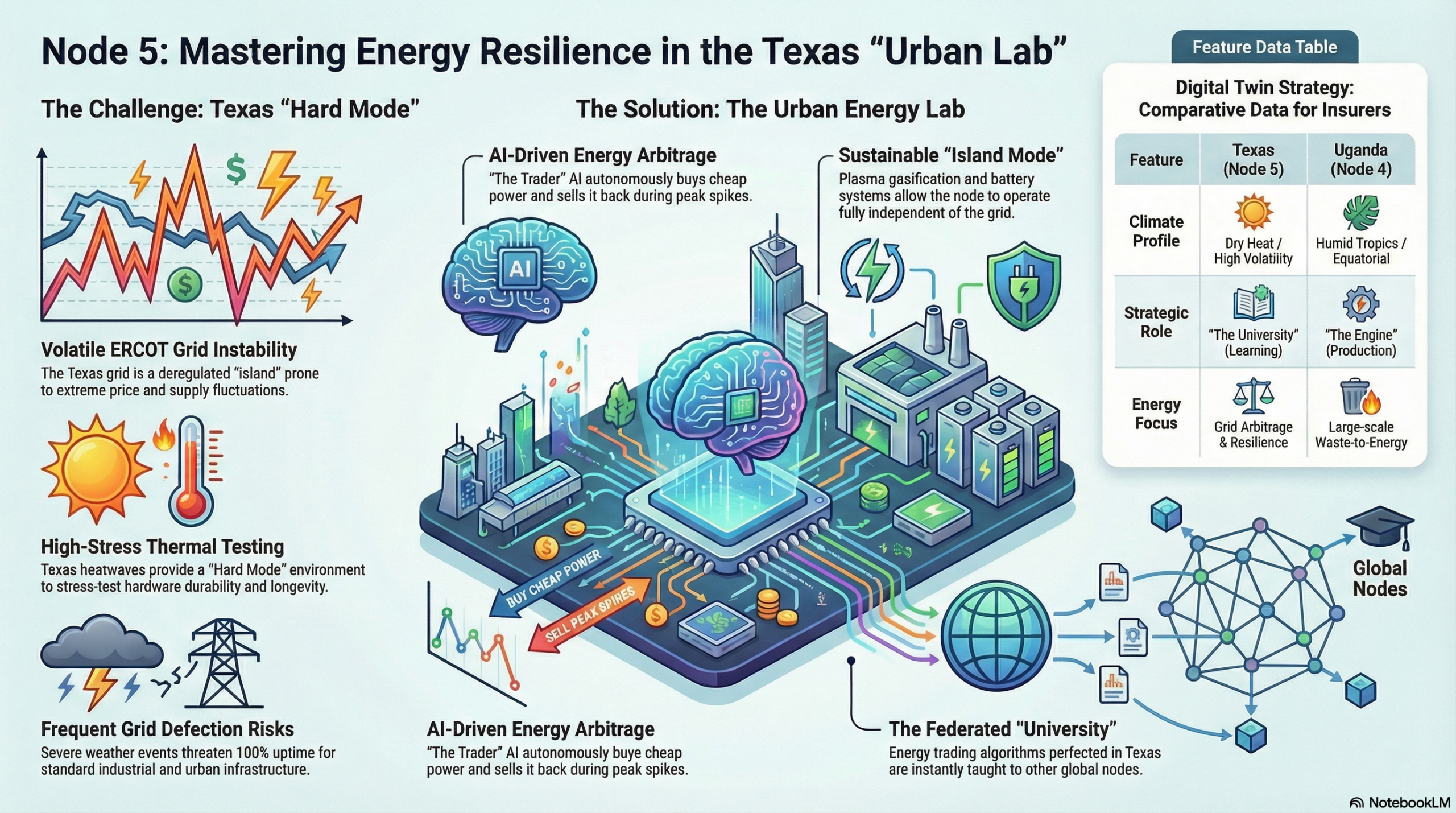
Located in Fort Worth, Texas, Node 5 (The Energy Student) serves as the network’s “University.” Strategically positioned near the historic Stockyards, it utilizes a 10 TPD Agra Micro-Unit and a specialized RIOS AI agent called “The Trader” to master the ERCOT grid.
The Revenue Model: Mastering the Trade
Node 5 turns grid instability into a financial weapon through a four-step cycle:
- Buy: The Trader monitors ERCOT and buys power when prices are negative or near zero due to oversupply.
- Store: Energy is captured in BESS (Battery Energy Storage Systems), such as Tesla Megapacks.
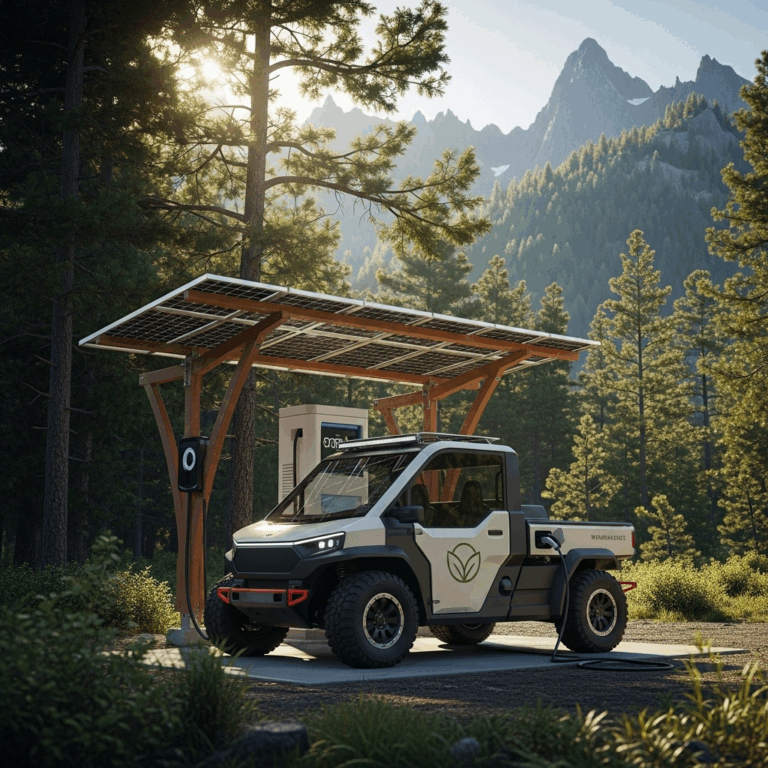
- Island Mode: During peak demand, the node disconnects from the fragile grid and runs on its own internal Agra-generated power.
- Sell: RIOS sells stored power back to the grid when prices hit the $5,000/MWh price cap, generating explosive returns during windows of volatility.
By acting as a Digital Twin to the Ugandan operations, Node 5 provides the comparative data needed to prove equipment longevity to insurers, demonstrating that the Sovereign Stack is a viable, market-ready “Business Case” for any climate.
The lessons learned in the Texas classroom provide the blueprint for a global mesh of independent communities.
6. The Planetary Mesh: Project Octagon and the Future of Aid
The Sovereign Stack is deployed through Project Octagon, a network of eight nodes designed to replace temporary, failing aid with permanent infrastructure—a model known as Humanitarian Aid as a Service (HAaaS).
The 8 Sovereign Nodes: A Global Nervous System
- Node 1 (Uganda): The Welcome Mat. Logistics, hospitality, and Kurb Kar deployment.
- Node 2 (Canada): The Brain. Central software authority and the DeReticular Academy.
- Node 3 (Arizona): The Simulator. Connectivity HQ and extreme heat “Desert Hardening.”
- Node 4 (Uganda): The Engine. 7,000-acre industrial park generating 11 MW of carbon-negative power.
- Node 5 (Texas): The University. Grid arbitrage and livestock biomass validation.
- Node 6 (Global): Human Software. Training “Township Managers” for local governance and HAaaS.
- Node 7 (Arizona): The Pop-Up. Expeditionary R&D proving rapid deployment from shipping containers.
- Node 8 (Undisclosed): The Business Case. A fully paid $85,000 commercial validation of the stack.
Together, these components create a resilient, self-healing world. For the aspiring learner and community leader, the path is clear: local sovereignty is no longer a dream, but a technical reality. By combining the Muscle of energy, the Motion of logistics, and the Mind of RIOS, we can finally build a world that stays powered on when the rest of the world goes dark.