
The Brain in the Bumper: Why Kurb Kars Runs on NVIDIA DRIVE

Here is a long-form article optimized for the Kurb Kars website. It adopts the established “Biz Builder Mike & Remnant” persona to maintain brand consistency across the ecosystem, explaining the complex integration of NVIDIA DRIVE into the RIOS network in an accessible way.
By Michael Noel (Biz Builder Mike) & Remnant
Date: December 8, 2025
Category: Technology / Autonomous Mobility
Read Time: 7 Minutes
The “Golf Cart” is Dead. Long Live the Micro-Transport.
Mike:
Let’s be honest. When most people hear “Low Speed Vehicle” (LSV) or “Neighborhood Electric Vehicle,” they picture a golf cart. They picture a plastic tub with a top speed of 15 mph that struggles to get up a hill and has zero intelligence.
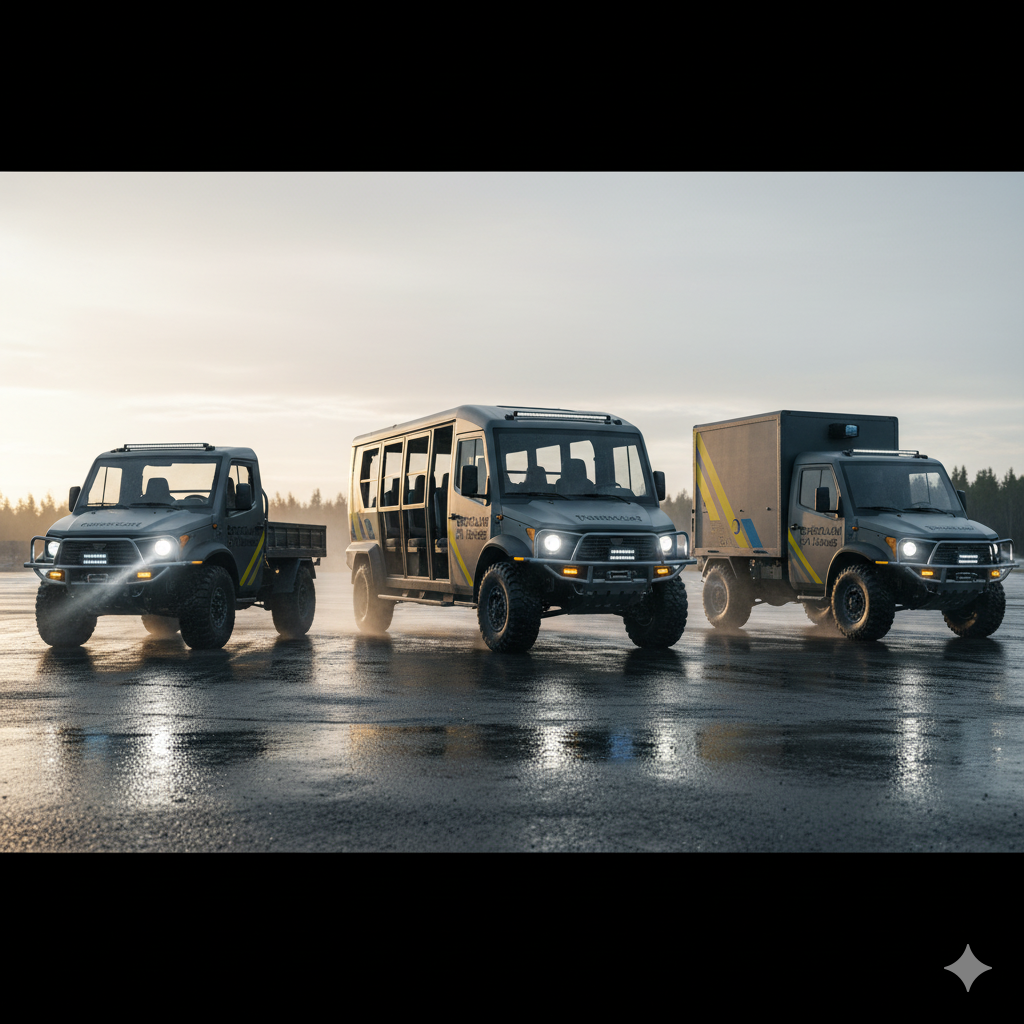
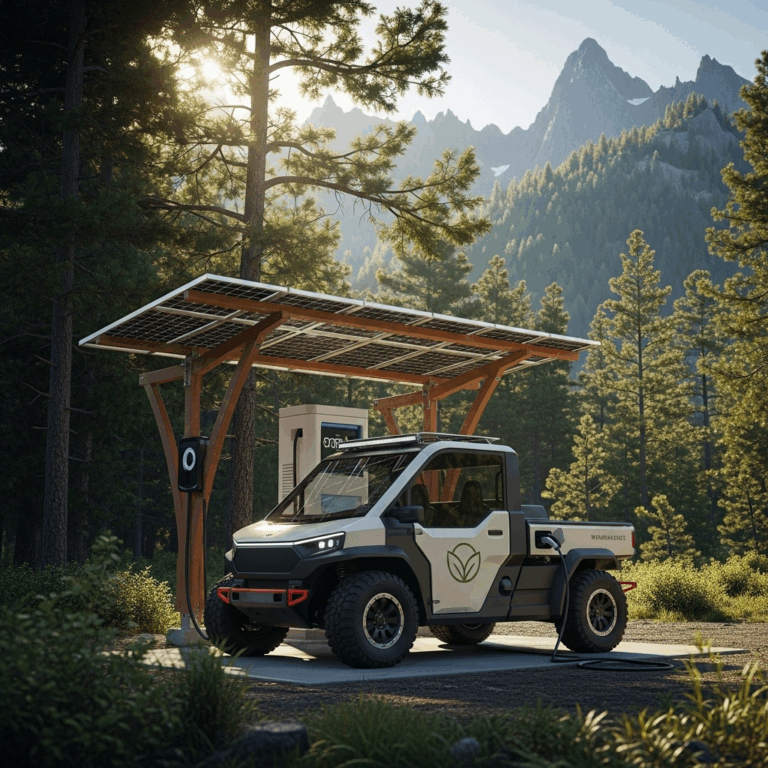
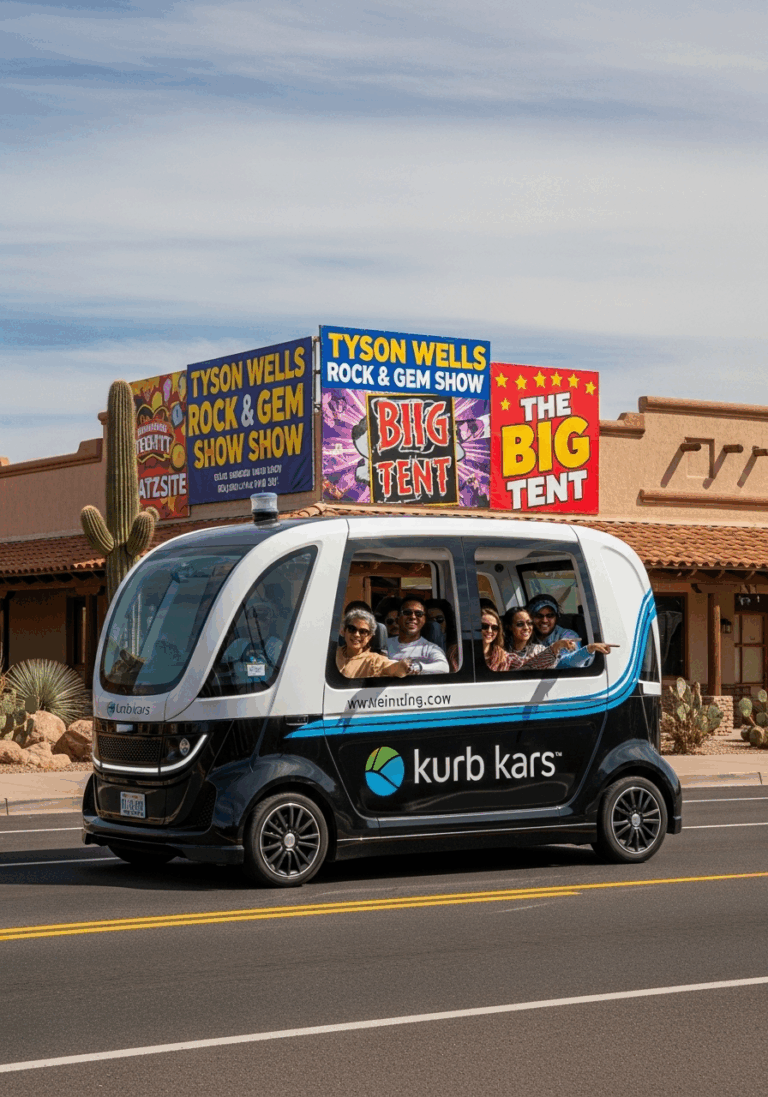
At Kurb Kars, we aren’t building golf carts. We are building the capillaries of the supply chain. We are building the shuttles that move doctors across massive hospital campuses, the flatbeds that move hemp bales across muddy farms, and the pods that deliver packages the last mile.
But here is the problem: If you want a vehicle to work in those messy, crowded, unpredictable environments, it can’t just be electric. It has to be smart.
Remnant:
Correct. A “dumb” vehicle requires a human operator for every single movement. This is inefficient. To unlock the true economic potential of a micro-transport fleet, the vehicle must possess Autonomy. It must perceive, plan, and act without constant human hand-holding.
Mike:
That’s why we didn’t try to write our own software from scratch. We went to the master.
We put NVIDIA DRIVE inside every Kurb Kar.
What is NVIDIA DRIVE? (It’s Not Just a Chip)
Remnant:
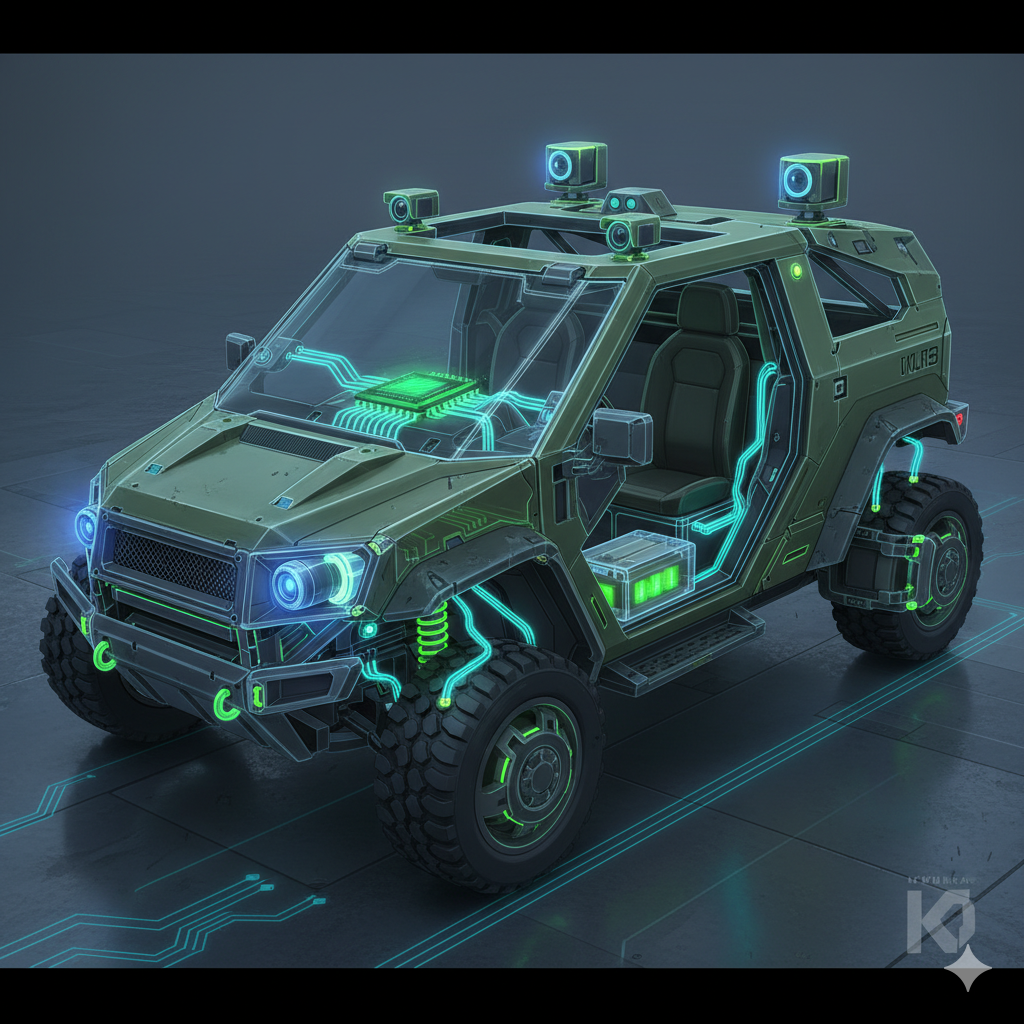
NVIDIA DRIVE is an end-to-end software-defined platform for autonomous vehicles. It is not merely a GPS; it is an AI Supercomputer residing within the dashboard.
At the heart of the system is the NVIDIA Orin (and soon, Thor) System-on-a-Chip. This silicon is capable of performing up to 254 Trillion Operations Per Second (TOPS). It processes streams of data from the Kurb Kar’s cameras, LiDAR, and radar sensors in real-time.
Mike:
Think of it like this: A normal car has a computer that checks if your oil is low.
A Kurb Kar with NVIDIA DRIVE has a supercomputer that identifies: “That is a pedestrian, that is a pothole, that is a stop sign, and that is a stray dog running into the road.”
It builds a 3D model of the world around it, 30 times a second. It gives a $15,000 utility vehicle the situational awareness of a $100,000 luxury sedan.
The Problem: The “Wild West” Environment

Mike:
Autonomous driving on a highway is actually kind of “easy” (relatively speaking). The lanes are marked. Everyone is moving the same direction.
But Kurb Kars don’t live on the highway. They live on College Campuses, Construction Sites, and Agro-Industrial Farms.
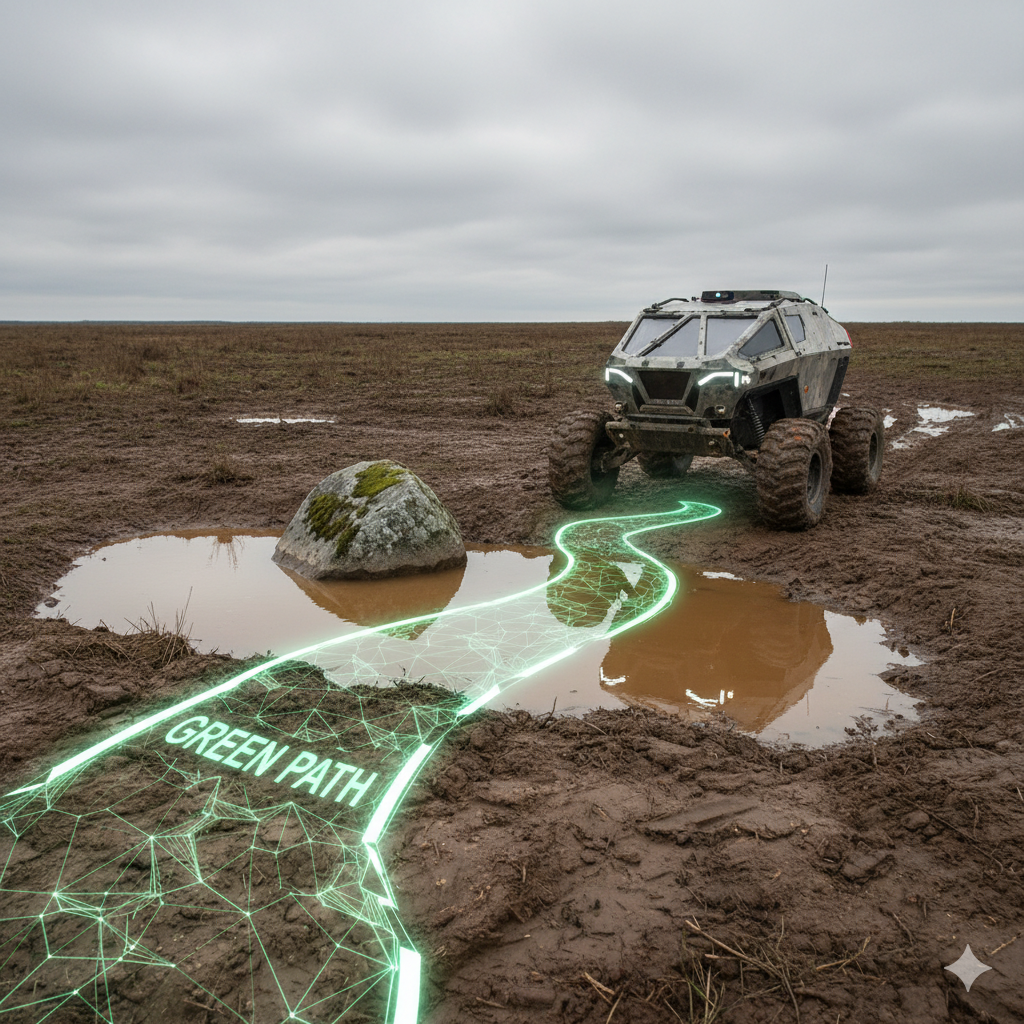
These are “Unstructured Environments.” There are no lane lines in a hemp field. There are no stoplights in a warehouse yard. There are just forklifts, mud, and people walking everywhere.
Remnant:
This is where NVIDIA DRIVE excels. Its “Perception Stack” utilizes Deep Neural Networks (DNNs) to navigate free-space areas. It does not need a painted yellow line to know where the road ends and the ditch begins. It “sees” the terrain.
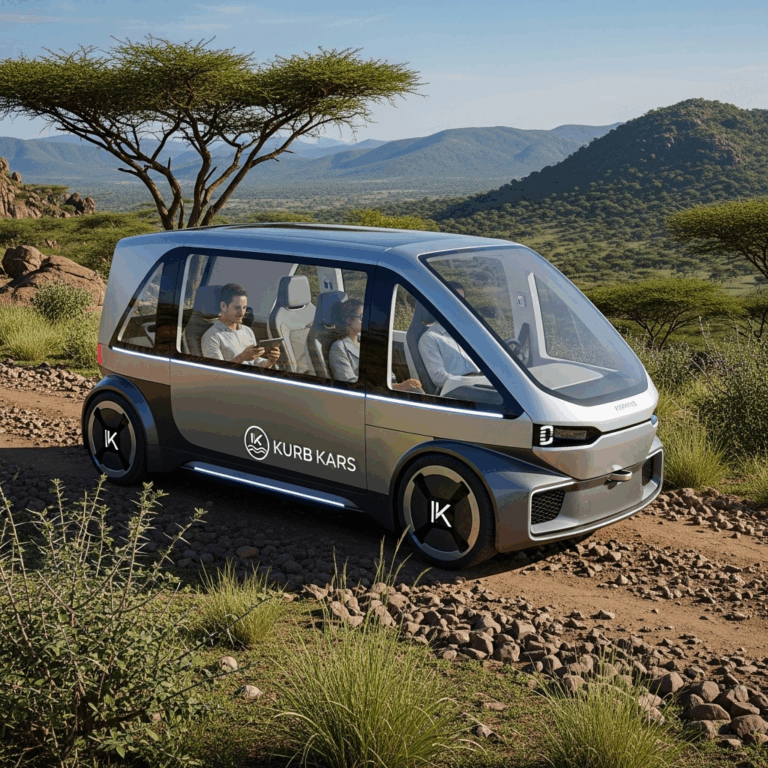
This capability is vital for Kurb Kars. It allows our vehicles to navigate a winding gravel path on a rainy night in Uganda just as safely as a paved road in Phoenix.
The “Sovereign Valet”: Integration with DeReticular RIOS
Mike:
Now, here is the secret sauce.
A smart car is great. But a smart car on a smart network is unstoppable.
This is where the DeReticular RIOS (Rural Infrastructure Operating System) comes in.
Kurb Kars are the physical “legs” of the RIOS ecosystem.
When a Kurb Kar drives past a RIOS Pilot Node (like the Tier 2 Standard Container), they talk to each other.
Remnant:
We call this V2I (Vehicle-to-Infrastructure) communication.
Here is the workflow:
- The Event: A Kurb Kar using NVIDIA DRIVE detects a fallen tree blocking the main path on a farm.
- The Edge Decision: The car’s onboard AI decides to stop safely.
- The Upload: The car connects to the local RIOS NeoMesh Wi-Fi bubble provided by the nearby DeReticular container. It uploads the sensor data of the fallen tree.
- The Fleet Update: The RIOS Node processes this update and instantly alerts all other Kurb Kars on the network: “Path A is blocked. Re-route to Path B.”
Mike:
It’s a hive mind. One car sees a problem, and the whole fleet learns how to avoid it in milliseconds.
And because we use the RIOS Pilot AI Core (Tier 3) for training, we can take that data, retrain the driving model overnight, and push a software update the next morning that makes the cars even better at spotting fallen trees.
Privacy & Sovereignty: The Anti-Big Brother
Mike:
There’s one more thing. A lot of autonomous car companies send your video feeds to a cloud server owned by a giant tech corporation. They own your data. They know where your trucks are moving and what your campus looks like.
We don’t play that game.
Remnant:
Because Kurb Kars run on the RIOS Sovereign Cloud, the data generated by NVIDIA DRIVE stays on your site. The video of your facility is processed by your RIOS Node. It is never uploaded to a third-party server unless you explicitly authorize it.
Mike:
That’s the “Sovereign” part. You own the car. You own the road. You own the data.
The Future is Rolling
Mike:
We are entering an era where logistics doesn’t need a driver’s license.
Imagine a fleet of Kurb Kars at a hospital, autonomously shuttling lab samples between buildings 24/7.
Imagine a Kurb Kar on a farm, following a harvester like a loyal dog, catching the crops as they fall.
With NVIDIA DRIVE providing the eyes, and DeReticular RIOS providing the brain, Kurb Kars aren’t just vehicles.
They are robots that do the heavy lifting, so you can focus on building the future.
Hop in. The ride is just starting.
Learn more about our autonomous fleet options at the Kurb Kars Shop.