Analysis of Privacy-Focused Tool Implementation and Linux Distribution Feasibility
Executive Summary
As of early 2026, no mainstream Linux distribution comes pre-installed with a comprehensive suite of privacy-focused decentralized tools, specifically the combination of Kubuntu (KDE Plasma) and Freenet/Hyphanet. While specialized distributions like MOFO Linux previously integrated these tools, recent updates have seen their removal due to storage constraints. Other privacy-centric distributions, such as Tails and Kodachi, prioritize Tor or I2P over Freenet, with Tails specifically being technically incompatible with Freenet’s persistent storage requirements.
The most viable path for establishing a stable, privacy-focused workstation is the manual installation of the Freenet/Hyphanet stack on Kubuntu. Kubuntu provides a stable, highly customizable Ubuntu-based foundation that supports the Java requirements necessary for legacy Hyphanet and the performance needs of the new Freenet (2023/Locutus).
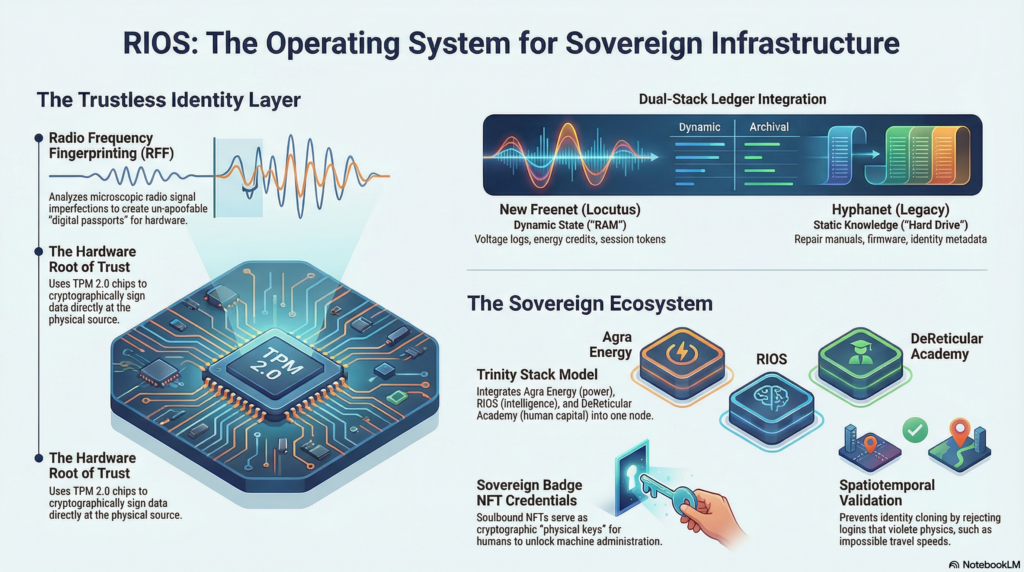
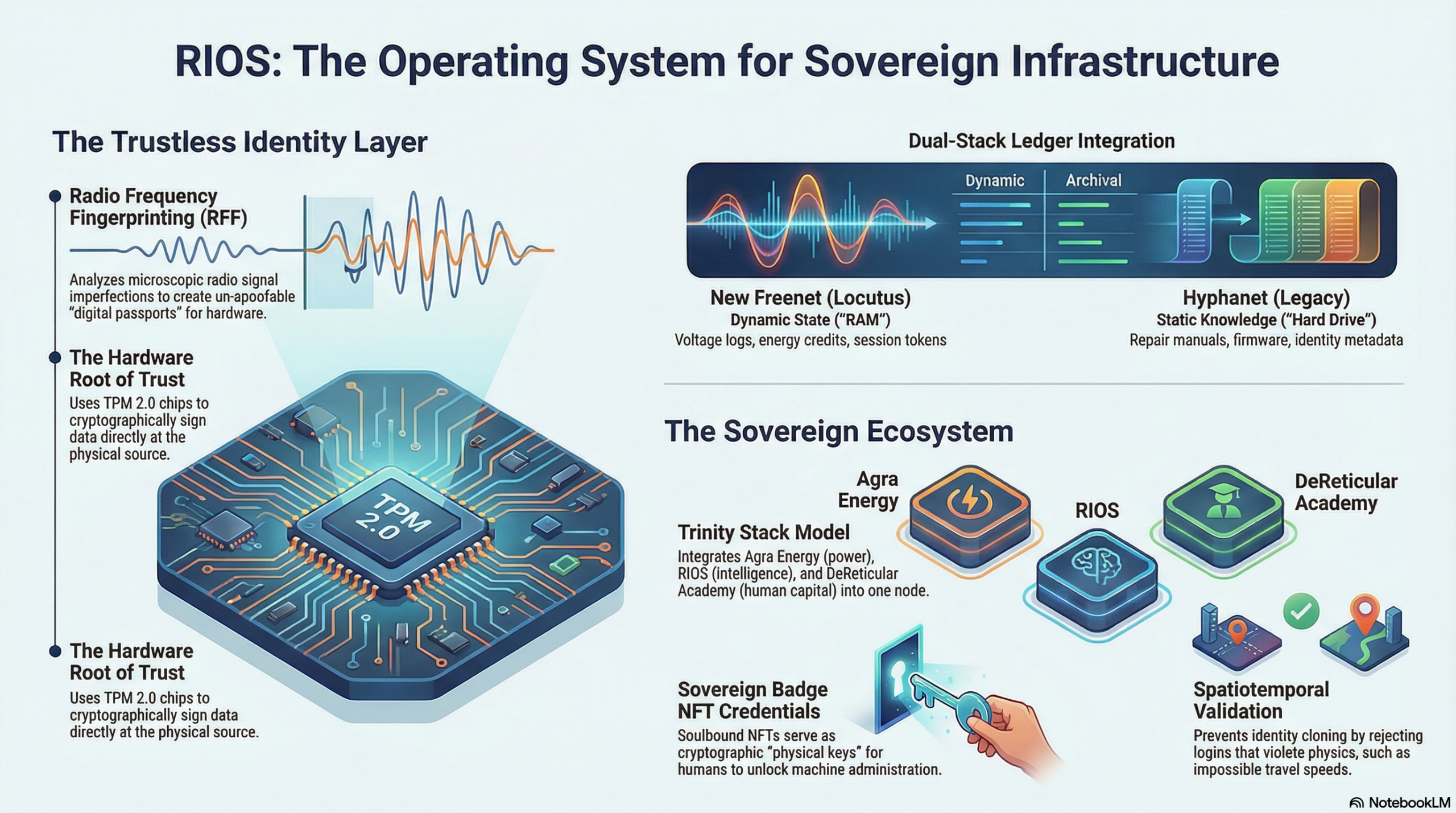
Beyond individual workstations, these privacy protocols are being integrated into physical infrastructure through the Rural Infrastructure Operating System (RIOS) by DeReticular. This “Sovereign Stack” utilizes Hyphanet for static, anonymous data storage and the new Freenet for dynamic, smart-contract-based resource management. This architecture bridges the gap between digital privacy and physical reality through a “Hardware Root of Trust,” using Radio Frequency Fingerprinting (RFF) and TPM 2.0 signatures to prevent identity spoofing.
——————————————————————————–
1. Feasibility Analysis of Linux Distributions
There is a distinct gap in the market for “out-of-the-box” Freenet-integrated operating systems. The following table evaluates the most relevant distributions based on their current status and technical alignment with privacy-focused protocols.
Comparative Distribution Analysis
| Distribution | Desktop Environment | Freenet Status | Suitability & Use Case |
| Kubuntu | KDE Plasma | No (Manual Only) | High. Offers stability and the Windows-like KDE interface; ideal for a custom setup. |
| MOFO Linux | i3 / DWM | Removed (v9.7) | Low. Versions 9.6 and older included it; current versions (2026) removed it to save ISO space. |
| Linux Kodachi | XFCE | No (Available) | Moderate. Excellent for Tor/VPN/DNSCrypt; Freenet can be added but is not default. |
| Septor | KDE Plasma | No | Moderate. Uses the same desktop as Kubuntu but is strictly focused on Tor integration. |
| Tails | GNOME | Incompatible | Low. Designed to wipe memory on shutdown; contradicts Freenet’s need for persistent datastores. |
Technical Limitations
- Amnesic Systems: Distributions like Tails are designed for anonymity via memory wiping. Freenet requires a persistent “datastore” of encrypted chunks on the hard drive, making it incompatible with pure amnesic models.
- Resource Intensity: Freenet (specifically the legacy Hyphanet client) is Java-based and resource-intensive, which often leads developers to exclude it from “Live” distributions to keep ISO file sizes manageable.
2. Implementation Framework: The Kubuntu Solution
Since no distribution offers a pre-configured suite, installing privacy tools on a stable base is the recommended strategy. Kubuntu is favored for its “friendly computing” approach and its identity as an official Ubuntu flavor.
Manual Setup on Kubuntu
Kubuntu’s base (Ubuntu LTS) ensures access to massive software repositories (APT) and Snap packages. To run the full privacy suite (Hyphanet/Freenet), the following requirements must be met:
- Java Environment: Necessary for Hyphanet.
- Freenet Installation: Download the offline installer from the official project page and execute via terminal:
- Local Access: Once running, the interface is accessed through a browser (Firefox recommended) at
http://127.0.0.1:8888.
——————————————————————————–
3. The “Sovereign Stack”: Real-World Application of Privacy Tools
The organization DeReticular provides the most advanced application of these software concepts in the physical world through its Rural Infrastructure Operating System (RIOS). This architecture, known as the “Trinity Stack,” consists of Agra Energy (Power), RIOS (Intelligence), and the DeReticular Academy (Human Capital).
Integration of Freenet and Hyphanet
RIOS employs a “Dual-Stack” approach to manage infrastructure data without central cloud servers:
- Hyphanet (Legacy – “Static Layer”): Used for censorship-resistant publishing. It hosts local “freesites” (manuals, wikis) accessible via private mesh networks (Trifi Wireless) even if the internet backbone is severed.
- New Freenet (2023/Locutus – “Dynamic Layer”): Utilizes WebAssembly (Wasm) smart contracts for real-time industrial data, such as energy credits and logistics logs (e.g., the HempGrade application). It operates on a “Zero-Gas” model, avoiding the volatile transaction fees associated with traditional blockchains like Ethereum.
——————————————————————————–
4. Trustless Identity and Physical Provenance
A core focus of the analyzed texts is how these privacy-focused tools evaluate and verify identity in decentralized environments.
The Hardware Root of Trust
To solve the “Sybil Attack” (where one actor creates many fake identities), RIOS anchors digital identity to physical physics:
- Radio Frequency Fingerprinting (RFF): Every hardware device has microscopic manufacturing imperfections that create a unique radio “hum.” RIOS scans this to create an “un-spoofable” digital passport.
- TPM 2.0 Attestation: Data is cryptographically signed by a Trusted Platform Module chip, with private keys burned into the hardware.
Global Identity Polling and “Double-Spend” Protection
The network polls for identity uniqueness using Distributed State Contracts on the new Freenet layer rather than querying a central server.
- Uniqueness Check: If a hardware identity is active at “Node A” (e.g., Arizona), and a clone tries to connect to “Node B” (e.g., Texas), the system detects a “Physics Violation” (impossible travel speed) and locks the identity.
- Provenance Check: For logistics, such as Kurb Kar autonomous pods, the network verifies “Exit Visas”—cryptographic handshakes from previous nodes—to ensure a continuous physical path.
——————————————————————————–
5. Human Authorization: The Sovereign Badge
Human interaction within these decentralized systems is managed through Sovereign Badges, which are NFT-based credentials.
- Mechanism: These are “Soulbound” NFTs issued by the DeReticular Academy. They cannot be traded or sold.
- Function: When a technician logs into a RIOS node, the machine issues a cryptographic challenge. The user signs this using the private key associated with their Sovereign Badge.
- Result: This creates a “Dual-Signed Object.” The market can verify that a specific machine action (e.g., lowering power output) was authorized by a certified human operator on a physically verified machine.
6. Strategic Analysis: SWOT and Gaps
While the technical framework is robust, the texts identify critical gaps in the current maturity of these privacy-focused systems.
SWOT Summary
| Strengths | Weaknesses |
| Physical-Digital Bridge (RFF prevents spoofing). | Reliance on Alpha Software (New Freenet 2023 is experimental). |
| Offline Resilience (“Island Mode” functionality). | High Technical Complexity (Steep learning curve). |
| Opportunities | Threats |
| Compliance with EU Deforestation Regulation (Provenance). | Regulatory Hostility toward darknet-adjacent tech. |
| Booming Decentralized Physical Infrastructure (DePIN) sector. | “Deepfake” attacks against RF Fingerprinting as AI advances. |
Identified Gaps
- Application Layer: RIOS is currently a “backend” with an “Empty OS” problem. The “Flood the Forge” initiative is designed to recruit developers to build user-facing apps.
- Human-Machine Interface: Moving beyond complex cryptographic signatures to user-friendly “Key Management” for non-technical users remains a challenge.
- Technology Maturity: Building critical infrastructure (power/water) on pre-beta software (Locutus) presents significant stability risks. DeReticular manages this by maintaining private, stabilized forks of the protocols.