The Doctor Will See You Now (In Your Driveway) Why 2026 Is the Year of Autonomous Care
Looking Back at the NEMT Revolution and Forward to the “Clinic on Wheels”
By The Kurb Kars Strategy Team
December 29, 2025
Introduction: The Pulse of the New Year
If 2025 was the year we taught robots to drive in the mud (thanks to our Quartzsite Live Lab), 2026 is going to be the year we teach them to care.
For the last decade, the Non-Emergency Medical Transportation (NEMT) industry has been the “check engine light” of the healthcare system. It was flashing red. Patients missed 3.6 million medical appointments annually due to transportation issues. Rural seniors were forced to sell their homes and move to cities just to be closer to dialysis. The system was linear, expensive, and relied on a dwindling supply of human drivers willing to drive three hours for a Medicare reimbursement.
At Kurb Kars, we spent 2025 building “The Muscle” of the Sovereign Economy. We moved tourists, we moved crops, and we moved waste. But in the background, we were preparing for the most critical mission of all: Moving Health.
As we look toward 2026, we are predicting a seismic shift in how healthcare reaches the homestead. Here is what the future holds for NEMT, Arizona, and the Kurb Kars fleet.
The 2025 Foundation: What We Learned in Arizona
Arizona has always been the global capital of autonomous driving. From the early Waymo tests in Chandler to our own Quartzsite Initiative in 2025, the Grand Canyon State is where robots get their driver’s licenses.
In late 2025, during our “Rural Turing Test,” Kurb Kars quietly ran a pilot program called “Project Pulse.”
- The Mission: Autonomous delivery of insulin and heart medication to off-grid “Sovereign Homes” during the monsoon season.
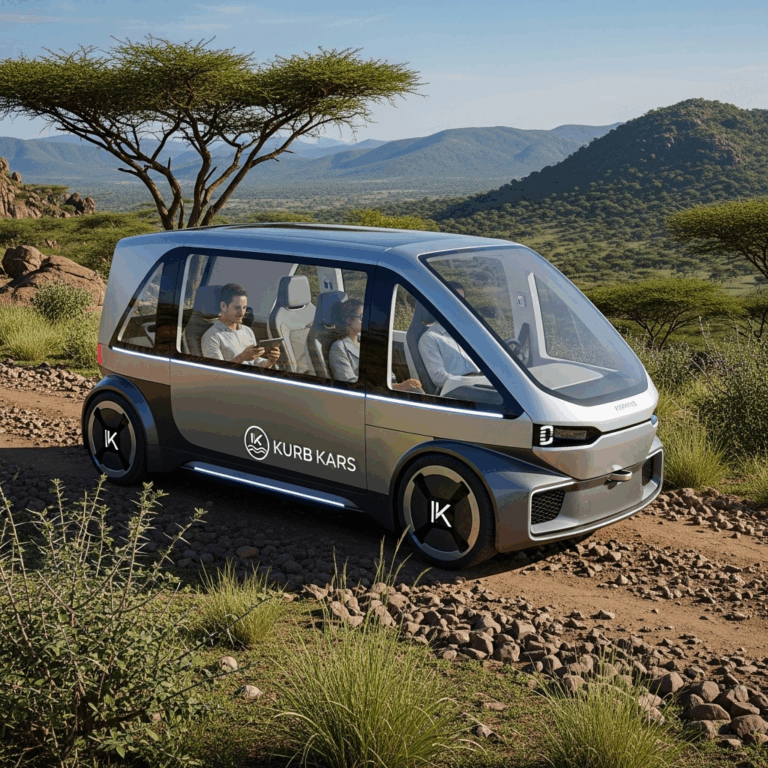
- The Result: 100% success rate. Our “Bush-Bots,” powered by Agra and guided by the DeReticular mesh, navigated washed-out roads that stopped standard delivery vans. RC Cars might be a thing in the future just saying.
We proved that Autonomous Mobility is not a luxury for city dwellers; it is a lifeline for the rural sick.
Prediction 1: The Death of “Curb-to-Curb” and the Birth of “Bed-to-Bed”
Current NEMT regulations often specify “curb-to-curb” service. The driver drops you at the sidewalk. In 2026, that standard dies.
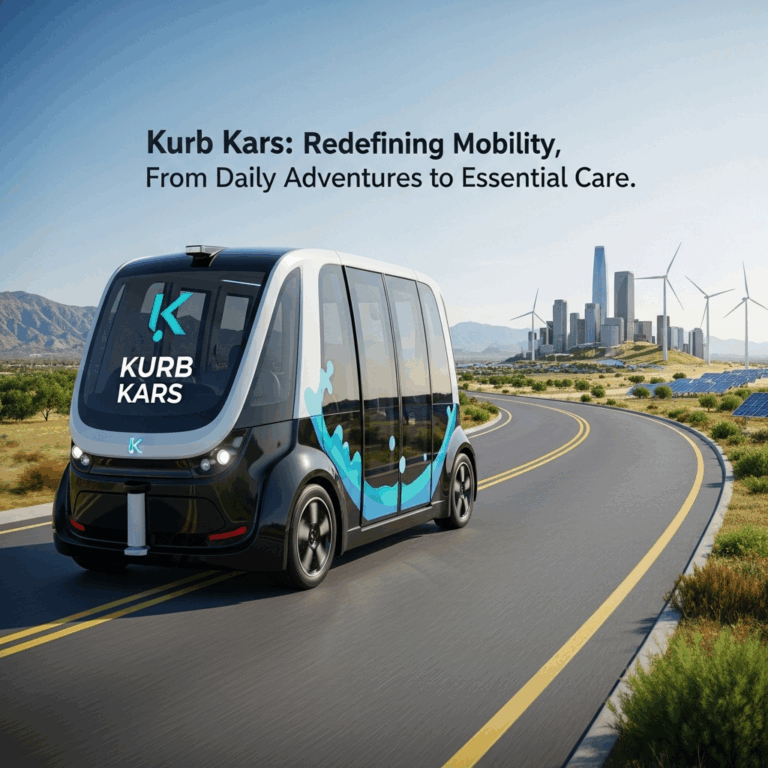
With the launch of the Kurb Kars “Care-Cab” (Model 26), we are moving to a “Door-Through-Door” model.
- The Tech: These vehicles aren’t just empty boxes. They are integrated with DeReticular’s RIOS (Rural Infrastructure Operating System). They know who the patient is, what their mobility limitations are, and where their appointment is.
- The Experience: The vehicle lowers to ground level (no ramps needed). It communicates with the patient’s smart home to unlock the door. It alerts the doctor’s office exactly 5 minutes before arrival.
In 2026, the vehicle isn’t just a ride; it’s the waiting room.
Prediction 2: The “Prescription Ride”
In 2026, your doctor won’t just prescribe pills; they will prescribe Mobility.
We are currently working with Biz Builder Mike to integrate Kurb Kars directly into the GAIC (Global Advanced Infrastructure Compliance) insurance framework.
- The Scenario: A doctor in Phoenix sees a patient in rural Yavapai County via telemedicine (on the DeReticular mesh). The doctor determines the patient needs a physical scan.
- The Action: The doctor clicks “Dispatch.” A Kurb Kar is instantly routed to the patient’s farm. The cost is automatically settled via the Alliance ledger—no paperwork, no “pre-authorization” phone calls.
Transportation becomes a clinical workflow, not a logistical afterthought.
Prediction 3: The Modular Clinic (The “Velcro” Health Pod)
Remember the “Velcro Principle” we announced in November 2025? It allows us to snap different modules onto our autonomous chassis.
In 2026, we expect to see the rise of the Rolling Clinic.
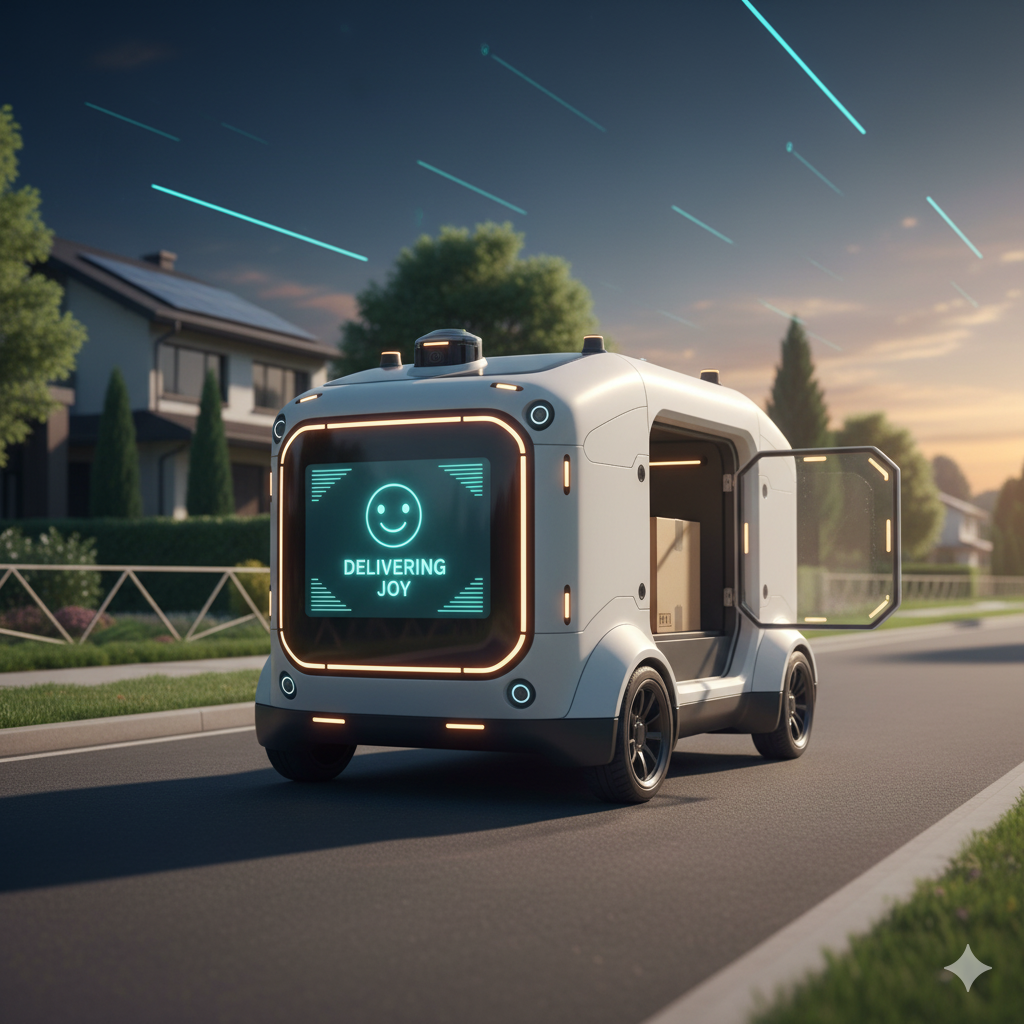
Instead of picking up a patient and driving them two hours to a phlebotomist, we will drive the phlebotomy lab to the patient.
- The Concept: A Kurb Kar “Mule” chassis carrying a sterilized, climate-controlled medical pod.
- The Utility: It pulls into the driveway. The patient steps inside. A robotic arm (or a visiting nurse riding along) draws blood, takes vitals, or performs an ultrasound. The data is uploaded instantly via the mesh.
This is the end of “Medical Deserts.” If you have a road (or even a dirt track), you have a hospital wing.
Prediction 4: Arizona becomes the “Safe Harbor” for Med-Tech
While other states are bogged down in liability debates (who is responsible if the robot crashes?), Arizona is poised to lead.
The Sovereign Systems Architect framework, established by our partners, provides a compliance layer that exceeds federal standards. In 2026, we predict Arizona will create a “Sovereign Health Zone,” allowing fully autonomous NEMT vehicles to operate without a safety driver, provided they run on the RIOS operating system.
This will drive costs down by 70%. When you remove the driver salary and fuel costs (thanks to Agra Dot Energy’s waste-to-fuel loop), rural healthcare becomes affordable again.
Conclusion: 2026 is Personal
At Kurb Kars, we love moving corn and compost. It’s honest work. But moving a grandmother to her chemotherapy appointment on a snowy Tuesday morning? That’s noble work.
The technology is ready. The “Brain” (DeReticular) is sharp. The “Heart” (Agra) is beating. And thanks to Kurb Kars, the “Legs” are ready to run.
In 2026, we don’t just bridge the gap between the farm and the city. We close it.
Your ride is here.
The Kurb Kars Team
The Muscle of the Alliance.
www.KurbKars.com