The Rural Healthcare Mobility Crisis: Transforming La Paz County Through Sovereign Autonomy
1. The Diagnosis: A System Under Strain
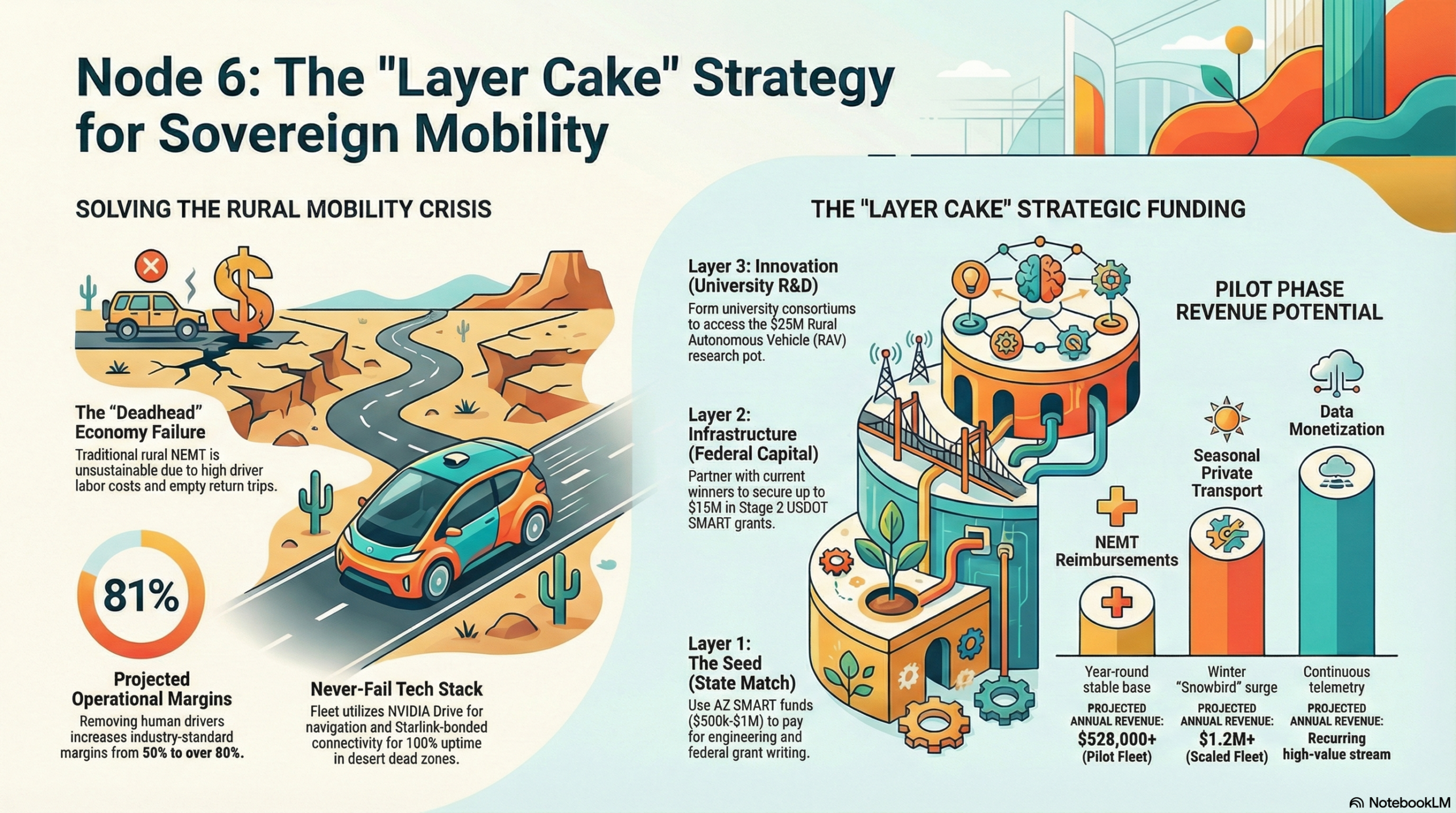
In the remote landscape of La Paz County, Arizona, the current transportation infrastructure is facing a systemic collapse. This crisis is defined by the “Deadhead” economy, a financial failure inherent in traditional Non-Emergency Medical Transportation (NEMT). In rural settings, providers are penalized for the long distances traveled to reach a single patient. Because they are often driving empty to a pickup location, the fuel and labor costs frequently exceed the reimbursement rates. This leads to chronic provider shortages and a total lack of sustainable transit options, forcing the system into a permanent state of fragility.
Demographic Breakdown: La Paz County Transit Profile
The following table illustrates the unique pressures on the local transit system, where a high-needs elderly population is underserved by existing infrastructure.
| Metric | Detail |
| Permanent Population | Approximately 1,805 residents |
| Median Resident Age | 71.2 years |
| Seasonal “Snowbird” Surge | 750,000+ visitors (Quartzsite, Jan–Feb) |
| Distance to Critical Care | 32 miles (Parker, AZ) |
| Current Service Frequency | “Camel Express” (Once per week) |
The Impact of the Reliability Gap
The failure to provide consistent transit has created a “Reliability Gap” with three devastating consequences for the region’s elderly and vulnerable:
- Life-Threatening No-Shows: Missing critical appointments for dialysis or chronic care leads directly to emergency hospitalizations.
- The Social Determinant Barrier: Transportation is the single largest non-medical barrier to health; without a physical link, medical care remains functionally non-existent.
- Telemedicine Inefficacy: Advanced digital health services remain a theoretical benefit if patients cannot reach a clinic for necessary physical diagnostics or follow-up procedures.
This gridlock of aging demographics and failing economics requires a departure from traditional transit toward a technology-driven, sovereign model that can operate in “Island Mode” when traditional systems fail.
——————————————————————————–
2. The Solution: The Node 6 Sovereign Mobility Model
To address these failures, Node 6—the Autonomous Transportation Division of the DeReticular ecosystem—serves as the “Circulatory System” of the global Project Octagon network. Its mission is Sovereign Mobility: providing on-demand transportation that achieves the “Decoupling” of movement from fragile energy grids, labor shortages, and unreliable data networks.
The Technology Stack
The Node 6 “Sovereign Stack” is built upon four technological pillars designed to withstand the rigors of the Arizona desert:
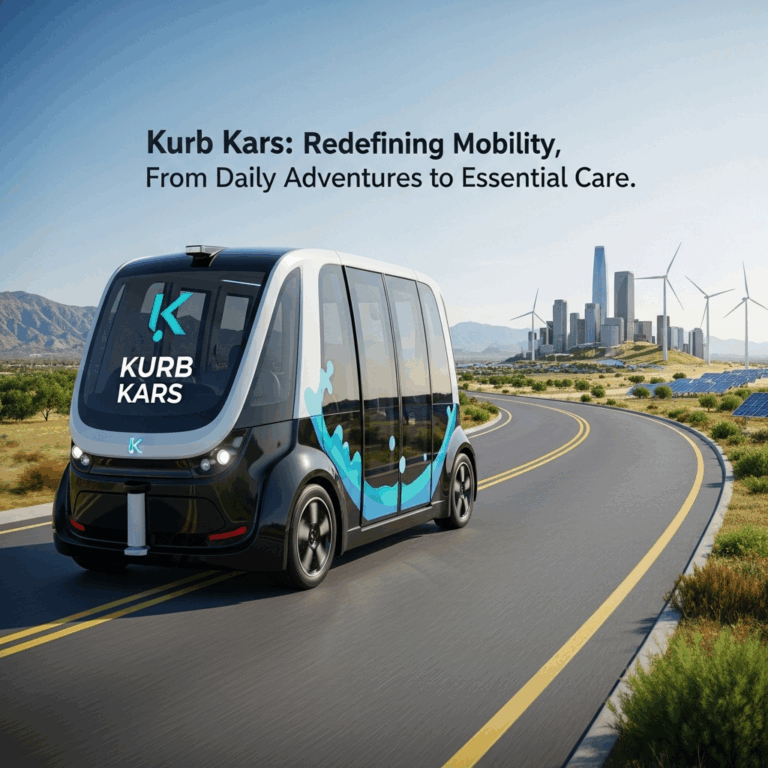
- The Muscle (Kurb Kars): Autonomous electric pods that eliminate human driver labor costs, allowing for viable 24/7 service in remote areas.
- The Brain (NVIDIA Drive): An AI platform capable of navigating the unmapped or poorly marked roads common throughout La Paz County.
- The Nervous System (Signal Fusion): A protocol that bonds Starlink satellite internet with cellular data to ensure 100% vehicle uptime through a Global Mesh Protocol.
- The Power Source (Vehicle-to-Grid): V2G technology that allows vehicles to act as mobile batteries, plugging into the microgrid to stabilize local power and trade energy.
Operational Superiority and Federated Learning
Traditional cellular networks often fail in remote desert canyons, creating “dead zones.” Node 6 overcomes this through Starlink bonding, ensuring unbreakable connectivity. Furthermore, the system utilizes Federated Learning: driving data perfected in the “blast furnace” of Arizona (Node 6) is pushed via network updates to optimize agricultural tractors in Uganda (Node 4).
By decoupling movement from the need for human drivers and stable ground-based networks, Node 6 fundamentally flips the economics of rural transportation.
——————————————————————————–
3. Economic Transformation: From Failing Transit to High-Margin Service
The primary expense in traditional transportation is the human driver. By removing the labor variable, the Node 6 “Kurb Kar” model transforms NEMT from a loss-leading public service into a high-margin economic engine.
Revenue and Margin Comparison
The financial sustainability of Node 6 is demonstrated by comparing its projected performance against industry standards for a standard 64-mile round trip to Parker.
| Metric | Industry Standard NEMT | Node 6 Kurb Kar Model |
| Base Rate (AHCCCS) | $12.21 | $12.21 |
| Mileage Rate | $1.53 / mile | $1.53 / mile |
| Projected Revenue | ~$110.00 | ~$110.00 |
| Operating Margin | 50% | 81% |
Secondary Revenue Streams
Sustainability is further bolstered by three alternative revenue sources that contribute to the “Sovereign Stack” financial model:
- Seasonal Surge: During the winter “Snowbird” migration, the fleet provides private ride-hailing for 750,000+ visitors, generating surge pricing revenue to subsidize year-round local services.
- Data Monetization: High-value “edge case” driving data (e.g., navigating dust storms) is verified via zkVerify and sold to global autonomous algorithm developers.
- V2G Energy Arbitrage: When vehicles are not in use, they function as mobile utility assets, trading energy back to the grid to generate revenue during peak demand.
This economic engine fuels the transition from simple transport to active healthcare delivery.
——————————————————————————–
4. The “Clinic-in-a-Box”: Improving Community Health Outcomes
The Node 6 model treats the vehicle as a mobile extension of the hospital, fulfilling the sovereign mission by reducing dependency on physical facilities. In partnership with Node 2 (Canada), Kurb Kars are equipped with “Clinic-in-a-Box” diagnostic modules.
- Telehealth Integration: The 45-minute drive to Parker is transformed into a productive healthcare window. Diagnostic sensors collect patient vitals and upload them via Starlink before the patient arrives, making the commute a preliminary check-up.
- Reducing “Transportation Deserts”: By providing 24/7 on-demand access, the model effectively eliminates the physical isolation of remote residents, bringing the clinic to the driveway.
Projected Benefits:
- A 40% reduction in medical appointment no-shows.
- Improved patient outcomes through consistent access to chronic care.
- Retention of capital within the local community by bypassing outside transport brokers.
——————————————————————————–
5. Strategic Integration and Funding Roadmap
Node 6 “piggybacks” on existing regional projects to maximize impact and reduce initial infrastructure costs.
- Quartzsite Transit Grid: Deploying a seasonal grid to solve the “last mile” for winter visitors.
- Route 66 Centennial: Positioning the project as “High-Tech Heritage” to secure preservation and tourism grants.
- The “Parker to Pad” Connection: Establishing an autonomous route for the Colorado River Indian Tribes (CRIT). This includes overlaying autonomous sensors onto the active $25 Million Mohave Road Reconstruction Project.
The “Layer Cake” Funding Strategy
To secure millions in non-dilutive capital, the project utilizes a three-tiered funding approach:
- Seed Layer (State): Uses the AZ SMART Fund (500k–1M) to finance the professional engineering and grant-writing required for federal bids.
- Infrastructure Layer (Federal): Targets the USDOT SMART and CFI Grants. The Strategic Hack: Partner with a Stage 1 winner, like the Arizona Commerce Authority, to qualify for Stage 2 USDOT implementation funds (up to $15 Million).
- Innovation Layer (Research): Partners with Arizona State University (ASU) as the prime applicant for the Rural Autonomous Vehicle (RAV) Research Program ($25 Million pool).
Implementation Timeline: Action Plan for the Champion
| Quarter | Strategic Milestone | Partner |
| Q1 2026 | Secure AZ SMART “Seed” funds; Form research consortium. | ASU / La Paz County |
| Q2 2026 | Submit CFI bid for charging hubs; Join Route 66 partnership. | WACOG / Road Ahead |
| Q3 2026 | Apply for USDOT SMART Stage 2; Submit RAV grant. | AZ Commerce Authority / CRIT |
| Q4 2026 | Secure operational funding as a rural transit operator. | ADOT (FTA Section 5311) |
Conclusion: By integrating advanced autonomy with a pragmatic economic model, Node 6 turns the “last mile” problem into a “first mile” opportunity for rural residents. This model proves that high-tech, decentralized infrastructure can deliver compassionate care while revitalizing the economic fabric of the American Southwest.